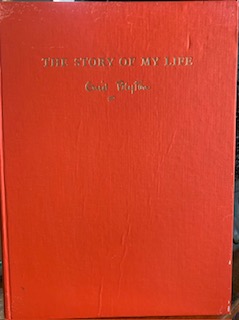
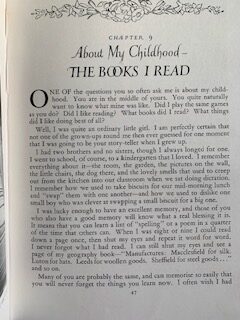
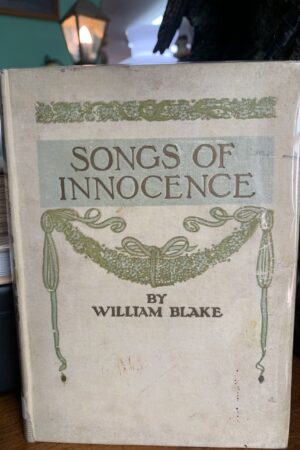
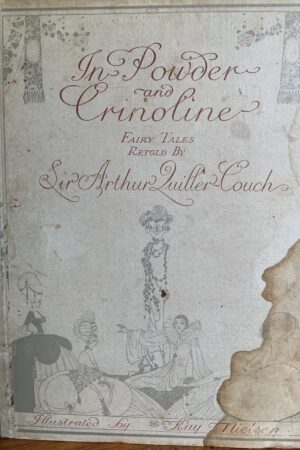
n her autobiography, The Story of My Life (1952), Enid Blyton says that, from an early age, she “liked making up stories better than I liked doing anything else.” As a child she would go to bed at night and stories would flood into her mind “all mixed-up, rather like dreams are, but yet each story had its own definite thread—its beginning and middle and ending.” Enid Blyton did not realise at the time that that was unusual, remarking in a letter to psychologist Peter McKellar on 15th February 1953: “I thought all children had the same ‘night stories’ and was amazed when one day I found they hadn’t.” She described her “night stories” as “all kinds of imaginings in story form,” saying: “Because of this imagining I wanted to write—to put down what I had seen and felt and heard in my imagination.” The young Enid was keen to develop her writing and story-telling skills. She told stories to her brothers, made up her own rhymes based on the rhythm and rhyme-scheme of popular nursery-rhymes, kept a diary, wrote letters to real and imaginary recipients, entered literary competitions and paid great attention in English lessons at school. She also read widely. As well as fiction and poetry, she read biographies of famous authors and borrowed books from the library on the Art of Writing.
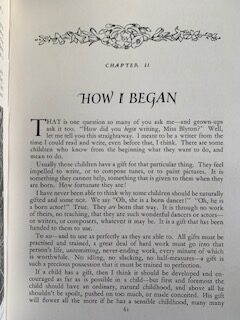
The advice Enid Blyton gives in The Story of My Life to children who want to write is: “Fill your mind with all kinds of interesting things—the more you have in it, the more will come out of it. Nothing ever comes out of your mind that hasn’t already been put into it in some form or other. It may come out changed, re-arranged, polished, shining, almost unrecognizable—but nevertheless it was you who put it there first of all. Your thoughts, your actions, your reading, your sense of humour, everything gets packed into your mind, and if you have an imagination, what a wonderful assortment it will have to choose from!”
Enid began submitting her work to publishers when she was in her teens, but at that stage she received countless rejection slips. However, that only made her all the more determined to persevere with her writing: “It is partly the struggle that helps you so much, that gives you determination, character, self-reliance—all things that help in any profession or trade, and most certainly in writing.” As we know, Enid Blyton went on to achieve phenomenal success, beginning with the publication of magazine articles and poetry when she was in her twenties.